Custom Software vs Off the Shelf Software: 7 Key Differences That Impact Your Operations
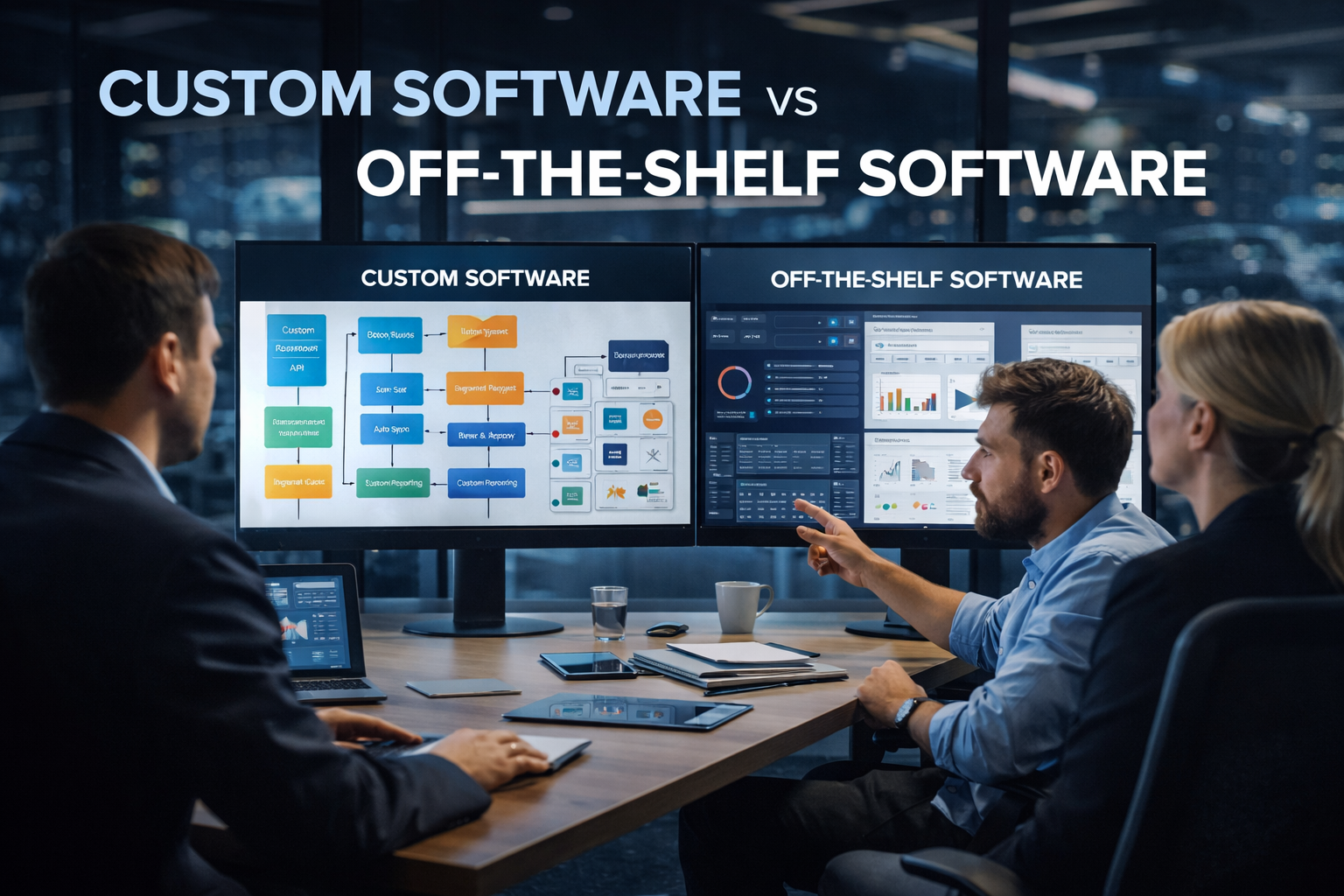
Custom Software vs Off the Shelf Software: 7 Key Differences That Impact Your Operations
Custom software vs off the shelf software is one of the most important decisions organizations make when building or scaling their systems.
Choosing the wrong option doesn’t just affect cost — it impacts reliability, efficiency, scalability, and long-term operational stability.
Custom software vs off the shelf software should be evaluated based on how critical your systems are to your operations, not just initial cost or speed.
What Is Custom Software vs Off the Shelf Software?
Custom software is built specifically for your organization’s workflows, requirements, and operational needs.
Off the shelf software is pre-built and designed to serve a wide range of users with standardized features.
Both approaches can work — but the right choice depends on how your systems behave in real-world conditions, not just how they perform in demos.
In practice, most organizations start with off the shelf tools and later transition to custom solutions as complexity increases.
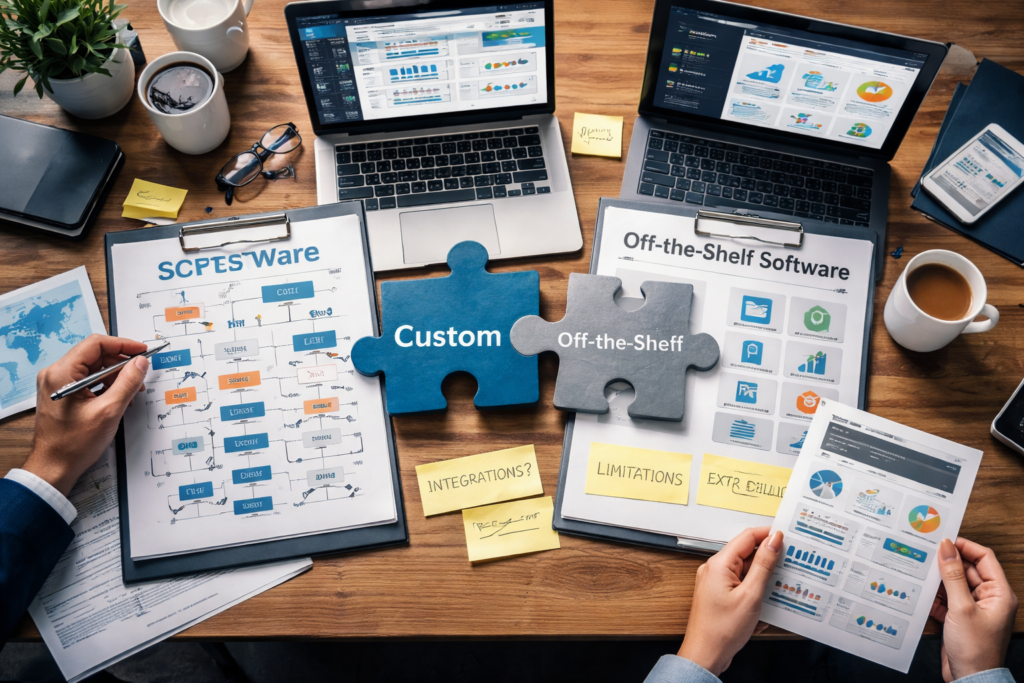
1. Flexibility vs Standardization
Off the shelf software is designed for general use cases. It works well when your workflows match the tool.
Custom software is built around your exact processes.
When operations are complex, rigid systems create friction. Teams end up building workarounds, using spreadsheets, or adding extra tools to compensate.
Over time, this leads to inefficiency and increased operational overhead.
Custom software eliminates that friction by aligning directly with how your business operates.
2. Reliability Under Real-World Conditions
Off the shelf tools are optimized for broad usability — not mission-critical performance.
Custom systems can be designed with:
- Failover systems
- Redundancy
- Real-time monitoring
If reliability matters, this becomes a major factor.
If your systems require consistent uptime, understanding mission critical software development becomes essential.
Systems that are not designed for reliability often fail under load, during peak usage, or when dependencies break — all of which are common in real-world environments.
3. Integration Capabilities
Off the shelf platforms often limit how deeply they integrate with other systems.
This leads to:
- Manual workarounds
- Data silos
- Inefficient workflows
Custom software allows seamless integration across your entire technology stack.
Instead of forcing systems to work together, custom solutions are designed to operate as a unified system.
This improves data accuracy, reduces manual input, and ensures your systems communicate effectively.
4. Scalability
Off the shelf tools may struggle as your organization grows.
They often have limits on:
- Users
- Data volume
- Performance
Custom systems can scale with:
- Increased load
- More users
- Expanding operational complexity
This prevents expensive migrations and system limitations later.
Scalability is especially important for organizations expecting growth or handling unpredictable workloads.
5. Long-Term Cost
Off the shelf software appears cheaper upfront.
But over time, costs increase through:
- Monthly subscriptions
- Add-ons and feature upgrades
- Inefficiencies and manual work
Organizations often underestimate how much time is lost working around system limitations.
Custom software has a higher upfront investment but often reduces long-term costs by eliminating inefficiencies and consolidating systems.
According to research from Gartner, organizations frequently underestimate the long-term cost of fragmented software systems.
6. Control and Ownership
With off the shelf tools:
- You don’t control the platform
- You depend on vendor updates
- You adapt to their roadmap
With custom software:
- You control features
- You control infrastructure
- You control your data
This level of control is critical for organizations operating in regulated or high-risk environments.
Ownership also allows you to evolve your system over time without being constrained by third-party limitations.
7. Operational Risk
Off the shelf tools introduce hidden risk when they don’t align with your workflows.
These risks include:
- System limitations
- Downtime outside your control
- Data inconsistencies
- Lack of visibility into failures
Custom software reduces risk by aligning directly with how your organization operates.
Custom software vs off the shelf software ultimately becomes a risk decision — not just a technical one.
When Should You Choose Custom Software?
Custom software is the better choice when:
- Your workflows are complex
- Reliability is critical
- You need deep integrations
- You cannot afford downtime
- Your systems are part of core operations
If you’re evaluating your options, explore our custom software development services to see how we build reliable, scalable systems for high-stakes environments.
For organizations operating in high-stakes environments, our mission critical software development approach focuses on reliability, scalability, and real-world performance — ensuring systems remain stable under pressure.
When Off the Shelf Software Makes Sense
Off the shelf tools are a good fit when:
- Your needs are simple
- Speed of deployment is the priority
- Budget is limited
- Operations are not mission-critical
These tools can be effective when used in the right context.
However, it’s important to recognize when they become a limitation rather than a solution.
How CodeBlu Helps You Decide
At CodeBlu Development, we don’t default to “build everything custom.”
We evaluate:
- Your workflows
- Your risk tolerance
- Your growth trajectory
Then we recommend the approach that actually fits your operation — not just what’s easiest in the short term.
Our goal is to ensure your systems support your operations — not hold them back.
Final Thought
The decision between custom software vs off the shelf software is not just technical — it’s operational.
If your systems are critical to your organization, the safest option is the one built for how you actually operate.
Custom software vs off the shelf software is ultimately a decision about control, reliability, scalability, and long-term success.
Not Sure If Your Software Will Hold Up? Let’s Find Out
Most organizations don’t realize their systems are limiting them — until growth, complexity, or failure forces the issue.
We’ll assess your current setup, uncover risks, and help you decide whether custom software or off-the-shelf solutions are the right fit for your operations.
Recommended for You
-
7 Signs Your Lovable or Replit App Needs Professional Engineering
You shipped fast. You got users. Your Lovable, Replit, Cursor, or Bolt prototype is live and people are actually using…
-
How to Choose a Mobile App Development Company (Without Getting Burned)
Choosing the Right Mobile App Development Company Matters More Than You Think If your business depends on software, choosing a…
-
Is AI Safe for Law Enforcement and EMS? What Agencies Need to Know
AI for law enforcement and EMS is rapidly gaining attention—but one question consistently comes up at every level of public…