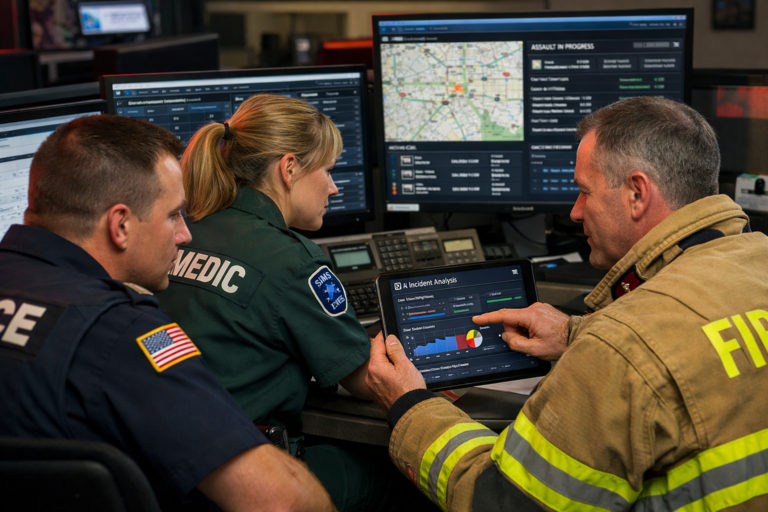
Is AI Safe for Law Enforcement and EMS? What Agencies Need to Know
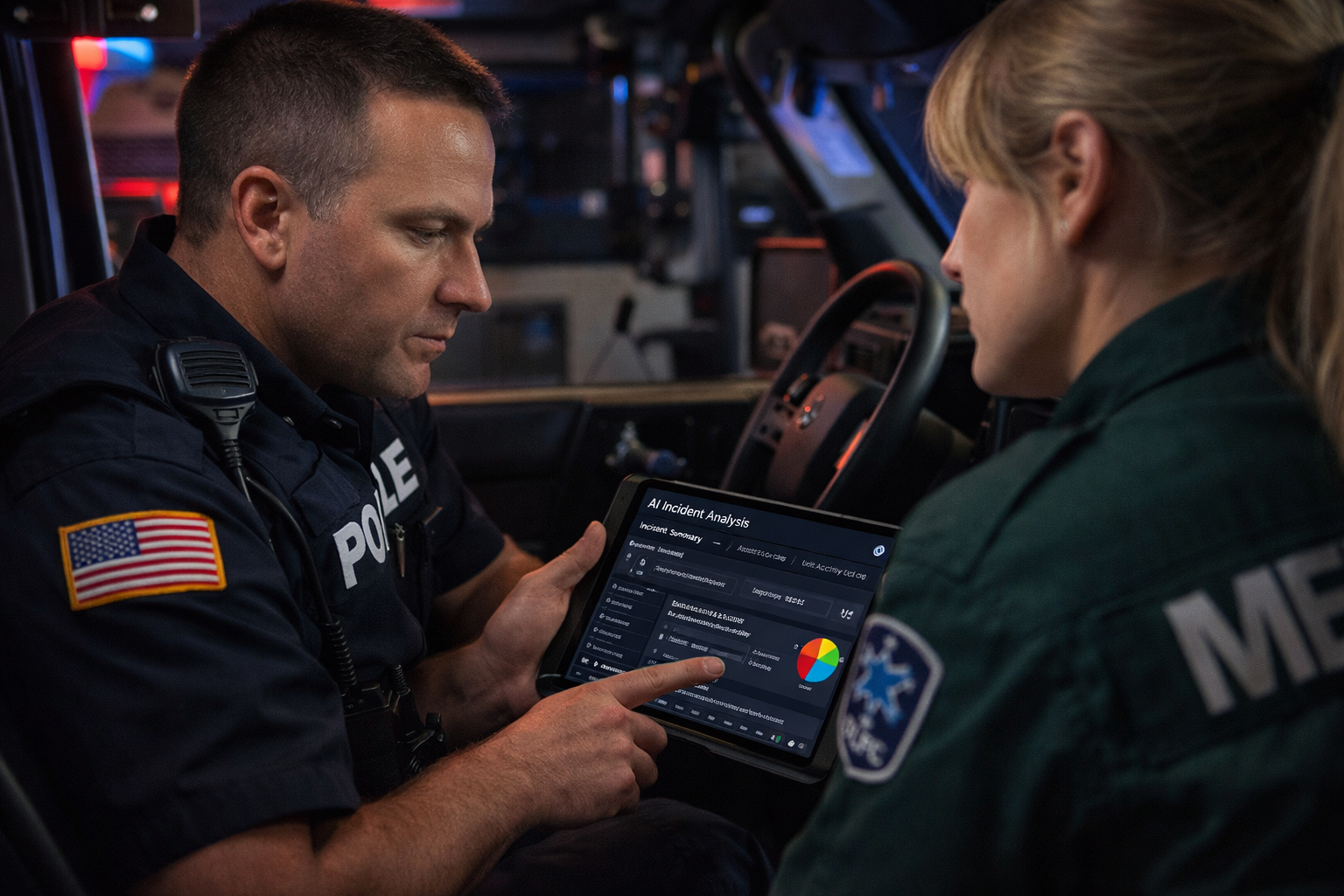
AI for law enforcement and EMS is rapidly gaining attention—but one question consistently comes up at every level of public safety leadership:
Is AI actually safe to use in real-world operations?
The answer is not a simple yes or no.
AI can be extremely powerful—but in public safety environments, it must be designed, deployed, and controlled correctly. Without proper safeguards, AI introduces real operational, legal, and compliance risks.
For agencies evaluating AI adoption, understanding these risks—and how to mitigate them—is critical.
What Does “Safe AI” Mean in Public Safety?
In commercial environments, AI safety often focuses on accuracy and performance. In public safety, safety means something very different.
Safe AI for law enforcement and EMS must be:
- Auditable: Every action and output must be logged and reviewable
- Controlled: AI must operate within defined boundaries
- Secure: Sensitive data must be protected at all times
- Explainable: Outputs must be understandable and defensible
- Compliant: Systems must meet CJIS, HIPAA, and internal policies
Unlike general AI tools, public safety systems must function in environments where decisions have legal consequences and impact human lives.
Key Risks of AI in Law Enforcement and EMS
Before implementing AI, agencies must understand the potential risks involved.
1. Data Security Risks
Public safety systems handle highly sensitive information, including criminal records, medical data, and incident reports.
Many off-the-shelf AI tools:
- Send data to external servers
- Lack secure data handling controls
- Do not meet CJIS or HIPAA standards
This creates significant security and compliance risks.
2. Lack of Auditability
In public safety, every decision must be traceable.
If an AI system generates a report or recommendation:
- Can you track how it was generated?
- Can you review the inputs and outputs?
- Can it be defended in court or internal review?
Many AI systems operate as “black boxes,” which is unacceptable in these environments.
3. Uncontrolled Outputs
Generic AI tools can produce inconsistent or unpredictable outputs.
In public safety, this can lead to:
- Inaccurate reports
- Misinterpretation of incidents
- Inconsistent documentation across cases
AI must be structured and controlled—not open-ended.
4. Operational Risk
AI systems that are not integrated properly can disrupt workflows instead of improving them.
Common issues include:
- Duplicated data entry
- Disconnected systems
- Increased complexity for personnel
AI should reduce workload—not add to it.
What Makes AI Safe for Public Safety?
Safe AI systems are not defined by the model—they are defined by the architecture around them.
1. Full Audit Logging
Every interaction with the AI system must be logged, including:
- Inputs provided by users
- Outputs generated by the system
- Any modifications made by personnel
This ensures accountability and traceability.
2. Role-Based Access Control
Not every user should have the same level of access.
AI systems must enforce:
- Permission-based access
- Controlled data visibility
- User-level restrictions
This prevents unauthorized use and protects sensitive data.
3. Secure Data Handling
AI systems must operate within secure environments that meet regulatory requirements.
- CJIS-compliant infrastructure for law enforcement
- HIPAA-compliant systems for EMS
- Controlled internal data pipelines
Data should never be exposed to uncontrolled external systems.
4. Structured Outputs
AI must produce consistent, predictable outputs aligned with agency standards.
This includes:
- Standardized report formats
- Controlled language structures
- Defined output templates
This ensures reliability across all use cases.
5. Human Oversight
AI should never replace decision-making authority.
Instead, it should:
- Assist with documentation
- Support analysis
- Enhance efficiency
Final decisions must always remain with trained personnel.
Why Most AI Tools Are Not Safe for Public Safety
Most AI platforms are designed for general business use—not high-stakes operational environments.
These tools often:
- Lack compliance controls
- Store data in external environments
- Provide outputs without traceability
- Operate without defined system boundaries
While these tools may be useful for productivity, they are not suitable for law enforcement or EMS operations without significant modification.
Industry frameworks such as the NIST AI Risk Management Framework highlight the importance of governance, risk management, and system transparency in AI deployments.
How AI Should Be Implemented in Public Safety
Safe AI implementation requires a structured, system-level approach.
This includes:
- Integration with CAD and RMS systems
- Defined workflows for AI usage
- Clear system boundaries and controls
- Ongoing monitoring and evaluation
AI should be embedded into existing operations—not layered on top.
To understand how AI integrates with dispatch and reporting systems, see our AI CAD RMS Integration guide.
For real-world applications of AI in the field, explore our AI for First Responders post.
The Future of Safe AI in Public Safety
AI will continue to play a growing role in public safety operations—but only if it is implemented responsibly.
Agencies that adopt structured, compliant AI systems will benefit from:
- Reduced administrative workload
- Improved documentation accuracy
- Enhanced operational awareness
- Better decision-making capabilities
The focus should not be on adopting AI quickly—but on adopting it correctly.
Work With CodeBlu
If you’re evaluating whether AI is safe for your agency, the most important step is understanding how it will be designed, controlled, and integrated into your existing systems.
We work directly with law enforcement, EMS, and fire departments to build AI systems that are secure, auditable, and designed for real-world operations.
15-minute call • No obligation • Focused on your current systems
Schedule a strategy call to evaluate your environment and identify how AI can be safely deployed.
Frequently Asked Questions About AI Safety in Public Safety
Is AI safe for law enforcement use?
AI can be safe for law enforcement when it is built with proper safeguards, including audit logging, role-based access control, and compliance with CJIS standards.
Can EMS agencies use AI safely?
Yes, EMS agencies can safely use AI when systems are HIPAA-compliant, secure, and designed to support—not replace—clinical decision-making.
What are the biggest risks of AI in public safety?
The biggest risks include data security issues, lack of auditability, uncontrolled outputs, and poor integration with existing systems.
How can agencies reduce AI risk?
Agencies can reduce risk by using structured AI systems with defined controls, secure data handling, and full integration with CAD and RMS platforms.
Recommended for You
-
7 Signs Your Lovable or Replit App Needs Professional Engineering
You shipped fast. You got users. Your Lovable, Replit, Cursor, or Bolt prototype is live and people are actually using…
-
How to Choose a Mobile App Development Company (Without Getting Burned)
Choosing the Right Mobile App Development Company Matters More Than You Think If your business depends on software, choosing a…
-
How AI Integrates with CAD and RMS Systems in Public Safety
AI integration with CAD and RHow AI Integrates with CAD and RMS Systems in Public Safety AI CAD RMS integration…